Physical Address
304 North Cardinal St.
Dorchester Center, MA 02124
Physical Address
304 North Cardinal St.
Dorchester Center, MA 02124

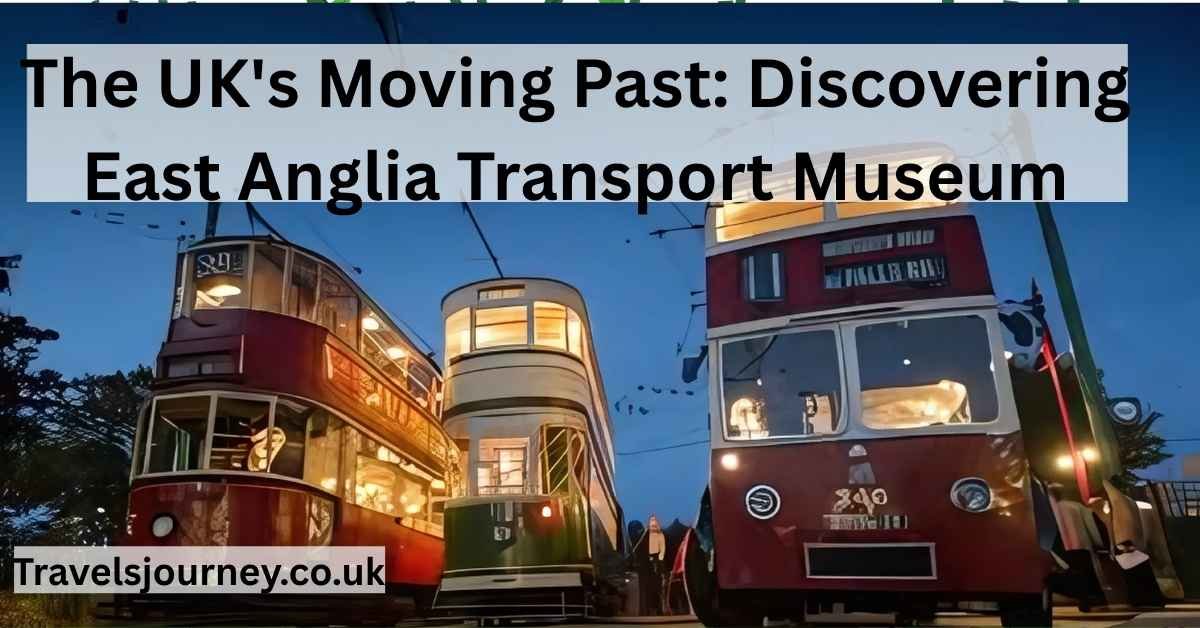
Nestled in the heart of Sufiolk the East Anglia Transport Museum provides a ride to another era. Vintage vehicle fans and history enthusiasts will love it, and it’s family-friendly to boot – making it one of the UK’s little treasures on the potted history of transport. It’s not just a museum, but an interactive time warp where you can take a ride on restored trams, buses and trolleybuses that once helped shape the daily lives of Britons.
Whilst it is often mistaken with it’s nearby counterpart the East Anglian Railway Museum in Essex the East Anglia Transport Museum at Carlton Colville just outside Lowestoft, has a much wider remit in that it doesn’t just cover the raiway. Its history dates back to the 1950s, when enthusiasts locally became determined to keep our public transport services from being lost forever.
The museum has grown to an impressive size in the intervening years, from humble tramline origins to full blooded transport museum with a reconstructed street scene.” Now you can walk on the cobbled streets, see old shop fronts and even ride on some of the vehicles, some that date from as early as the 1900s and are enhanced by an army of dedicated volunteers who lovingly restore and maintain the vehicles.
East Anglia Transport Museum opened to public in 1972. But its story started years before that, when team of preservationists saved a decommissioned Lowestoft tram and laid out the first few feet of track on a field that would eventually house the museum. Since then, it has developed itself steadily and creatively into one of the UK’s most interactive and immersive transport attractions receiving thousands of visitors a year.
Today, the museum boasts operational trams, trolleybuses, and classic motorbuses making it the only museum in the UK where you can experience all three modes of electric transport in motion, set within a realistic period environment.
East Anglia is an historical region of eastern England including the counties of Norfolk, Suffolk[citation needed], and likely (until recent boundary changes) some areas of Cambridgeshire and Essex. It comes with a rich history that goes all the way back to the Anglo-Saxon days. It derives its name from the East Angles, one of the three major Germanic tribes who made slider imagesEUROPE map after the withdrawal of the Romans from the island in the 5th century.
Although it was not made by an individual or shaped by a specific process, its history of conveyance had much to do with the 19th-century Industrial Revolution and the heyday of the railways. As a location between London and the coast it was key transport route and its physicality responded to that, even if the infrastructure has disappeared, with sections around parts of like the the EA Transport Museum preserved in parts.
Many of the UK’s transport museums occupy former stations, but one close to East Anglia is Chappel and Wakes Colne Station in Essex where the East Anglian Railway Museum is based. This historical station, here co-still operating today as part of the national rail network, is also an engineering heritage item with preserved steam and diesel locomotives and rolling stock.
By contrast, the East Anglia Transport Museum at Carlton Colville was never a train station; it was a greenfield site created specifically to house more comprehensive heritage transport collections of all types. This in turn, also meant the museum was free to lay tracks and reconstruct streets to suit the needs of trams and trolleybuses, adding an extra layer of authenticity to a visit.
Not an Architectural Statement Unlike many similar musuems, The East Anglia Transport Museum has no real architectual view or heart as such, the entire musuem has grown organically as the result of collaborative volunteer effort. From the original tram line to its vast array of buildings and exhibits, the museum is the culmination of decades of effort by transport enthusiasts, engineers, and historians.
Its streets and buildings recreate a realistic image of a British Street from the mid-20th century, with period signs, vehicles and even the overhead power lines for the trolleybuses and trams. It is a testament to the museum’s roll-up-its-sleeves, grass-roots ethos, and its long-lived desire to preserve and spread the gospel of aviation, like hands-on wont do at the museum with rides and interactive displays.
A standout for bus lovers on a trip to the East Anglia Transport Museum is the grippenholdt of old buses, some from before London’s most offensive buses. One of London transport’s most controversial chapters, meanwhile, was the launch and closure of articulated “Bendy buses.”
The buses, which began operating on London streets in 2002, were designed to carry more passengers and cut loading time. However, they soon fell out of favour, largely dropping out of common use aside from football specials, primarily over safety fears, fare evasion, and their unsuitability for the capital’s narrow streets. The last of the Bendy buses had been removed from London service by 2011 under the mayorship of Boris Johnson.
Of the “Bendy” buses there is obviously none to be seen at the East Anglia Transport Museum but what you will find is an interesting selection of double deckers, single deckers and even open top buses that have in many cases had local influence within East Anglia and beyond.
The British Motor Museum at Gaydon, Warwickshire probably has the largest collection of British built road vehicles, but is also possibly the most isolated. Filled with a collection of 400-plus classic cars and prototypes, some of them highly rare, one-offs, you can call it a day long after any stereotype of Midlands grey sadness had definitely passed.
That’s not so say there aren’t highlights as far as historic public transport vehicles are concerned, with the East Anglian Transport Museum springing immediately to mind. Unlike the majority of museums, in which the exhibits are largely static, you can actually take rides in the restored trams and trolleybuses, making this as educational as it is fun. It’s this hands-on interactivity that makes the museum a firm favourite not only with families and schools but with transport enthusiasts as well.
The East Anglia Transport Museum isn’t just about preserving the past; it’s about animating it. From the clang of a tram conductor’s bell to the shunt of a trolleybus pulling away, each visit is a voyage in Britain’s transport history.
Whether you’re here on a seaside break or coming specifically from afar, this museum offers a pleasantly nostalgic day out to suit all ages. It’s not often you get a chance to walk and I mean ride through the UK’s rolling history.
So when you’re next in Suffolk when you don’t just pass through history, you can step aboard it, at The East Anglia Transport Museum.